Thursday, June 3, 2021

Elegant pearl jewellery for glamorous June birthdays

 The pearl is the only ‘gem’ in the world produced by a living creature; rising from the sea as opposed to originating from the depths of the earth. Up until the 19th century, pearls were predominantly worn by nobility, be they Kings, Queens, Maharajahs or Chinese Emperors, set into crowns or sewn onto clothes, to symbolise power and wealth. La Peregrina (meaning ‘The Wanderer’) is the most legendary pearl of all; 55 carats and renowned for its perfect symmetry. It was discovered in the Gulf of Panama in the 16th century and first owned by a succession of Spanish monarchs, and later gifted to Queen Mary I of England, who can be seen wearing it in historical portraits. It was bought at auction in 1969 by Richard Burton, as a gift for Elizabeth Taylor, who had Cartier design a necklace of pearls and rubies around it, based on a portrait of Mary Tudor. And in 2011, after Elizabeth’s death, La Peregrina was sold by Christie’s, fetching $11.8 million.

Coco Chanel declared, ‘a woman needs ropes and ropes of pearls’, Jacqueline Kennedy Onassis famously dubbed them ‘always appropriate’, and Grace Kelly favoured ‘pearls on screen and in my private life’. Pearls are of course, a mainstay of our own Royal Family; the Queen is seldom without her favourite three strand pearl necklace, a gift from her beloved father King George V1, and across the pond earlier this year, we witnessed Kamala Harris become the Vice President of the US, wearing a pearl necklace by Wilfredo Rosado.

If you’d like more details on your pearl choker, then perhaps add a brooch or a charm on it. You can add a classy vintage or an edgy modern piece to the pearls since the combination of those two different styles is also trending.

The pearl obsession is here to stay for a while. So if you’re thinking about whether to invest in your pearly jewellery, clothes, and accessories, you should. You must have at least a few pearl pieces if you consider yourself a fashionista. You won’t have a problem finding what to match with your pieces to pull the right look since there is nothing you can’t find without pearls on it. And the colourful pearls now give you more options when styling your look, than the classic white ones.

Wednesday, June 2, 2021

Gemstones: Fashion statements and a new hotspot for investment.

 The traditional engagement rings are slowly being replaced by gorgeous gemstones such as Sapphires, Ruby, Emerald, Turquoise, and Amethyst. Most brides today prefer rings with pop-up colours instead of all-white or all-yellow. Celebrities from Aishwarya Rai Bachchan to Blake Lively wear coloured gemstones not only to serve sentimental and astrological purposes but as a luxury style statement too.

Gemstones, Royals and sentiments

In the past, Napoleon bought an elegant sapphire ring for Empress Josephine. Even today, Royals have not shied away from expressing their love for gemstones. Duchess of Cambridge, Kate Middleton wears the same Sapphire studded engagement ring that once decorated late Princess Diana’s hands. The ring is well above half a million dollars today, but no one can put a price tag on the sentimental value it holds for Prince William and his family.

Gemstones as style statements

The growing popularity of gemstones can be witnessed clearly as many celebrities now use gemstone jewellery as style statements. This clearly indicates that gemstones have found their niche in the lifestyle and fashion market. Bollywood actress Deepika Padukone was seen wearing a Rubies necklace during fashion weeks. Rubies are known for their lovely colour and astrological benefits. Similarly, Kareena Kapoor can be seen wearing a Coral and a Pearl ring. Her ring has been captured in many movies, clearly indicating that she keeps them even on sets.

The legendary tale of the resurgence of Amitabh Bachchan’s acting career is a household story. Still, even today, Big B can be seen wearing his trusted Neelam ring along with a Columbian Emerald (Panna ring), suffice to say that his career and fashion game is still on point.

Growth of gemstones market

With more and more youngsters ditching the traditional diamond rings and opting for brighter or deep coloured stones, the demand for gemstones has increased exponentially in the last few years. Wedding seasons or not, the gemstones market is growing at a rapid pace. The growing demand for gemstones has effectively revolutionized the market, so much so that from traditional jewellers to global brands have started investing in gemstones.

The Indian Gems and Jewellery sector contributes 7 per cent of the country’s GDP. The ongoing global pandemic has affected almost every business, and the gemstones market is no different. From April to June last year, there was a drastic decline of 70 per cent in the exports market, but with the economy reopening in the United States, Europe and China, revival and recovery seem a lot more plausible than before.

Gemstones — A successful investment

The Gem and Jewellery Export Promotion Council has proposed reducing import duties on cut and polished diamonds and other gemstones to 2.5 from 7.5 per cent to double the export of gems and jewellery pieces to $70 billion by 2025. People have started buying gemstones as an investment as gemstones are scarce stones, so they do not depreciate and thus remain a sound investment throughout.

The simple demand and supply method is working for the growing gemstone market. Since more and more people are preferring gemstones, the market is currently offering vast growth opportunities. To become successful in investing in this volatile market, one must have an excellent eye to choose the authentic ones. It is also highly advisable to always go for brands that provide certificates from verified sources.


Tuesday, June 1, 2021

Jewellery Makers Gain On Mandatory Hallmarking Of Gold Jewellery


Shares of jewellery makers rose after the government reiterated its move for mandatory hallmarking of gold jewellery but extended its deadline to June 15 given the lockdowns in th various parts of the country to deal with Covid-19 pandemic.

Kalyan Jewellers rose 5 per cent, Titan Company advanced rose as much as 3 per cent, Thangamayil Jewellery rose 2 per cent, PC Jeweller advanced 3.13 per cent, Rajesh Exports climbed 1.7 per cent and Tribhovandas Bhimji Zaveri advanced 1.5 per cent.

Analysts say that listed jewellery retailers and makers will benefit from government’s move for mandatorily hallmarking gold jewellery.

Gold hallmarking is a purity certification of the precious metal and is voluntary in nature at present.

According to World Gold Council, India has around 4 lakh jewellers, out of which only 35,879 have been certified by the Bureau of Indian Standards (BIS).

In November 2019, the government had announced that hallmarking of gold jewellery and artefacts would be made mandatory across the country from January 15, 2021. However, the deadline was extended for four months till June 1 after jewellers sought more time in view of the pandemic.

A committee, headed by BIS Director General Pramod Tewari, has been formed to ensure proper coordination and resolve the implementation issues. The committee would also comprise Nidhi Khare, additional secretary, Department of Consumer Affairs and representatives of jewellers associations, trade and hallmarking bodies, among others.

Friday, May 28, 2021

The Ultimate Jewelry Style Tips Worth Knowing


Jewellery is the staple of every woman’s wardrobe. It’s what defines your style. Your dress shapes your personality. So, don’t just dress for the sake of it. Instead, you always dress to impress. Let your beauty sparkle. Accessorize like a pro. Blend different shapes, colours, and textures. But how do you go about this? Well, here’s how to coordinate jewellery like a pro!

Create Layers

Experiment with different types of colours and textures. Create appealing layers with your bangles, rings, and necklaces. When layering necklaces, for instance, you may want to consider combining different lengths. This will go a long way in making you look stylish and sophisticated. Rings and bracelets can be mixed and matched in all sorts of attractive combinations.

You can even try wearing multiple earring styles. It’s super easy. All you need is to collect jewellery pieces of different sizes, textures, and designs. Then, try them on in various combinations to see what looks better.

Get Some Sparkly Earrings

When it comes to beauty, earrings are extremely useful. They play a significant role in emphasizing your looks. So, be sure to choose unique earrings that perfectly frame your face. Plus, they should complement your hair and skin tone.

Combine Different Metals

 Don’t be afraid to mix different colours. You don’t necessarily have to stick with gold or sterling silver jewellery. You can as well try pendants that contrast with the colour of your chain. That would bring out a perfect look. When paired with metal colours and layered necklaces or bangles, pendant earrings can be outstandingly beautiful.

Determine the Focal Point

Where’s the focal point? Is it your eyes, your face, or your neck? Would you like people’s attention to be drawn to those areas? Well, go ahead and choose the best jewellery. Showcase your beauty in style. 

If you’re wearing sparkly earrings, for instance, then opt for subtle, necklaces and rings. Or you can even do away with the necklace. All items shouldn’t be bold. Instead, you should know how to create a balance between them.

Expand Your Wardrobe

Do you have some free time? Well, you may want to spend this time trying different outfits with various pieces of jewellery. Try out as many combinations as you can. This can help you determine what works best. Don’t just focus on clothes and jewellery. You can as well add in other accessories like watches, scarves, as well as, bags.

You’ll actually be astonished at what you can come up with. If you don’t have many pieces of jewellery, consider purchasing a few extra pieces. Look for items that’ll extend and add interest to your wardrobe. Invest in sparkly things that’ll help you make a statement.

Break the Rules

Fashion trends greatly affect what people wear. However, it isn’t a good idea to keep the following fashion at the expense of your personal preference. You don’t have to become a fashion slave for you to stay stylish. If you do this, you might end up losing yourself. Plus, it can be extremely expensive.

Thus, it’s always important to try evolving your own style. Come up with something that suits your personality and makes you feel confident. Of course, that might not look fashionable right now but if you own it then you’ll definitely be fine.

Invest in jewellery that perfectly matches your colouring frame and overall sense of style. When trying to accessorize, be sure to take all these aspects into consideration. That’s the only way through which you can achieve your desires. Remember, your personality is a crucial part of your well-being. So, don’t compromise on it when choosing jewellery items to wear. Make sure that what you are wearing truly showcases your personality.

Try Wearing Your Rings with Panache

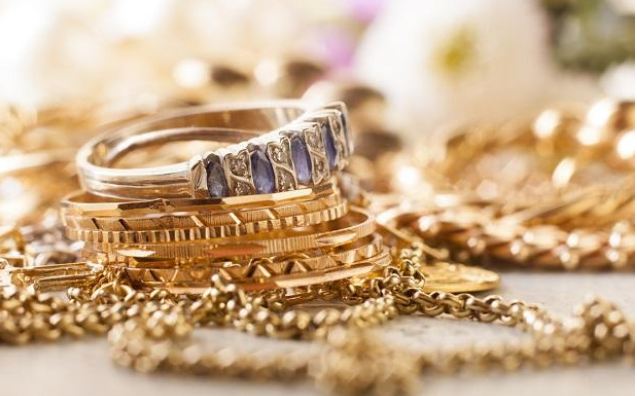
Stacking rings can be incredibly stylish. It can add so much versatility to your wardrobe. Plus, mix and matching them can significantly improve your looks. For a more minimalist look, you can consider stacking only two simple rings.

Depending on your preference, you can either match rings or mix different colours and textures. When wearing multiple rings, avoid putting on more than one ring on each hand. Simply wear an odd number of rings on each hand and you’ll be good to go. Remember, you can always break the rules. When it comes to beauty, everyone has their own style. And there’s an endless list of jewellery items you may want to accessorize with.

Choose Your Necklace Wisely

Make sure that your necklace or pendant is visible. Unless it’s a sentimental piece, you’ll want people to see your beautiful jewellery. So, be sure to match the necklace to your neckline. This will go a long way in enhancing your outfit.

If you’re wearing a V-necked outfit, for instance, then a pendant sitting above your cleavage can work wonders.  For a higher necked outfit, a long necklace would be incredibly beautiful. A rounded necklace is great with other rounded necklines.

At times, it’s good to go without a necklace. If you’re wearing a beautiful pair of earrings, for instance, then you shouldn’t necessarily put on a necklace. Depending on your outfit, you can either wear a necklace or not. If you’re wearing a high-necked outfit, don’t put on a necklace.

Don’t Always Wear Sentimental Jewelry

You don’t have to wear sentimental items regularly. It isn’t a must for you to wear your engagement ring every day. But if you must wear it daily, then consider layering it with other jewellery pieces. This will go a long way in adding interest and diversity to your style. For instance, you may want to get yourself a longer or an adjustable chain that hangs beneath your clothing if it doesn’t match the colour of your outfit.

You don’t always have to stick with the rules. Dressing up is a personal matter. So, you can always do it the way you want. Your style is your personal decision. It defines who you truly are. Settle for whatever fits you.

Try Different Shades

In the past, it was considered awkward to mix different metal colours. But with the current developments, that’s no longer the case. There’s no need to restrict yourself to sterling silver and gold jewellery.

Feel free to try out pendants featuring a different chain colour, or layered necklaces in different metals to create an elegant impression. When done right, this fashion trend can be highly impressive. So, why limit yourself to specific options when you can easily combine different metals? Let jewelers help you combine different metals today!

Match It Up With Your Clothing

Before you start dressing, think about your clothing. Once you’ve decided on the type of jewellery you’d like to wear, go ahead and choose matching clothing. Make sure that your clothes work perfectly with the jewellery, as well as other accessories. Doing this will ensure that you end up with the right combination that’ll make you look fashionable

Choose the Right Sizes

With the right jewellery, dull outfits can be transformed into something special. If you’re wearing a simple outfit, consider wearing timeless jewellery pieces. This will ensure that your simple outfit is brought to life.

 However, if you’re wearing bold clothing, it’s often better to go with smaller jewellery pieces. The secret is to accessorize with both small and larger pieces of jewellery. Plus, you should always consider combining different shades, textures, and designs. This will go a long way in enhancing your beauty and making you look trendy.

Dress For The Occasion

Do you regularly type on the keyboard? If so, you should avoid wearing dangling wrist jewellery. And if you’re dressing for work, you should avoid wearing bangles and hanging bracelets. Before putting on your jewellery, you should carefully consider where you’re going. Think about what you’ll be doing, as well as, how your jewellery comes off to onlookers. There’s nothing disappointing like wearing the wrong type of jewellery for a given occasion.

Where do you want people’s attention to be drawn? Are you dressing up for a special event? Well, if you’re wearing something that’s intended to catch the eye, then it’s better to make the focal point on your neck, ears, or eyes.

If you’re wearing a pricey necklace, for instance, then opt for more subtle rings, as well as earrings. This will help you strike a perfect balance between the contrasting shades. And that’s exactly what you’re dying to achieve, right? You want to step out in style and let the world know that you’re the beauty queen.

Mix Busy Patterns With Simple Jewelry

When paired with ornate jewellery, busy patterns can be highly impressive. Instead of showy accessories, consider investing in solid bracelets, watches, as well as earrings.

Plus, you should also take into consideration the material of your outfit. If your wardrobe features heavily stitched fabric, ornate jewellery can be an excellent choice for you. Besides, wearing ornate jewellery will augment your boldness and enhance your overall appearance.

Highlight Your Face With Statement Rings

If you want to highlight your face, consider wearing a pair of statement earrings. Look for the flashy ones that enhance your facial appearance. When making your selection, be sure to consider the shape of your face and the colour of your eyes.

If you have a heart-shaped face, for instance, you may want to settle for drop earrings. And if your face is oval-shaped, you should consider studs or triangular earrings. It all starts with understanding the shape of your face. From there, choosing the perfect jewellery will be a walkover.

Be Mindful Of Your Skin Tone

Jewellery shouldn’t just match your outfit. If you want to stay trendy, consider highlighting your skin with jewellery. For you to win at accessorizing, you should know how to enhance the look of your skin. Silver is a beautiful metal that illuminates most natural tones. On the other hand, gold works well with darker skin tones.

Red, blue, and white gold gems blend well with cooler skin tones. For warmer skin tones, you can choose yellow, green, or orange gemstones.

Strike A Balance

Rubies and canary diamonds make a statement by themselves. Both of these colours are bold and fiery. They look great when paired with black and white. However, they can as well pair nicely with blue and purple. Most stylists derive their inspiration from the colour wheel.

According to the colour wheel, warm and cool colours blend one way. And on the other hand, they also blend well in the opposite. For instance, deep green and dark blue jewellery items pop against an orange dress.

Striking a perfect balance between cool and warm shades is basically what beauty is all about. Opposites attract. So, don’t limit yourself to matching options.

Go For Diamonds

Are you finding it hard to coordinate your jewellery with different outfits? If so, consider opting for diamonds. When exposed to light, the classic white diamond will elegantly show off all the shades that make up its composition. And this will make it easier for you to stay stylish. You can comfortably wear diamonds with any outfit.

Key Takeaway

Do you have an overflowing jewellery collection, but you don’t seem to be getting anything meaningful out of it? Then, think differently. Embrace creativity. It’s time you gather confidence and start trying different styles.

Go through your collection and identify missing items. And once you’ve done that shop around for those pieces of jewellery. Remember, fashion is all about being unique. Look for things that compliment your sense of style and personality.  Incorporating fashionable jewellery into your look is always an incredible idea.

The Bottom-Line

So, you have finally decided to take your beauty to the next level? You’re now ready to turn things around, right? Do you want to make the most out of your jewellery collection and still remain stylish? Well, it all starts with being confident. Don’t be afraid to try new things. Don’t be conservative. That way, you’ll be able to stay fashionable. The above guide offers practical tips to help you accessorize like a pro. Good luck!

Thursday, May 27, 2021

Tips to care for your jewellery: What you need to know


All of us love our gold jewellery. It is therefore only fair that the time and interest that we give to buying our favourite pieces should also go into caring for them. Storing them properly and cleaning will ensure that they retain their charm. We bring you some tips that can help you maintain those trinkets and increase their shelf life, courtesy of Deepshikha Gupta, VP Designer, Melorra.

Segregate and store

Jewellery pieces must be stored separately to avoid scratches or breakage. You can store them in soft-lined compartments and away from direct sunlight, dampness, or even extreme temperatures. Often, it is better to store them in the boxes they come with. You can also wrap gold and precious/semi-precious stones in acid-free tissue or cotton to ensure they don’t catch dust or moisture.

Wear them with care

Your jewellery should be the last thing you put on when you get ready. Makeup and other cosmetics can contaminate jewellery, so let all of that dry before you wear your jewellery. This is because the chemicals in these can cause discolouration.

Clean them gently

Make sure to regularly and gently clean all your jewellery for removing oil, dust or other kinds of contamination. You can use simple things like soap and water and a soft toothbrush to clean them. However, do not rub or handle them roughly. Take a jeweller’s advice if you are unsure of how to clean them. There are special jewellery cleansing materials available for gold.

Buy certified jewellery

Right paperwork is as important for precious jewellery as for anything else that you own. This will ensure that you can get the pieces rectified in case there is damage. Keep all the certificates with you, especially in the case of diamond jewellery.

“Lightweight gold jewellery is for any time, anywhere. Hence, caring for them is as important as servicing your car or any other household item. This will make sure that your jewellery retains its shine and is always ready to wear. Following these tips can help and also ensure your jewellery game is always on point,” she added.

Wednesday, May 26, 2021

Are Lab-Grown Diamonds Forever? Depends on Who You Ask


When Michael Coan went in for an interview at Christie’s, one of the world’s most prestigious auction houses, his interviewer laid out 20 items for him to price. Some of them were diamonds. Coan, who currently teaches gemology at the Fashion Institute of Technology in New York but knew less about diamonds at the time, made up his mind: He wouldn’t be getting this job. 

“I walked in there not knowing a darn thing.” But Coan took a stab anyway, listing off prices: “This bracelet’s $20,000, this is about $45,000, this is $12, this is about $18,” he remembered saying. “I’m thinking, ‘Okay, that’s it. I had a good day. I’m leaving.’” But he had priced the items closely enough — and landed the job. 

The predicament that pleasantly surprised Coan years ago underscores a conversation that’s been shaking up the jewelry industry in recent years: how much a diamond is really worth. In a world where diamonds can quickly be grown in labs and customers are increasingly aware of ethical and environmental consumption concerns, both lab-grown and mined diamond companies are crafting a precise narrative to woo prospective customers.about:blankabout:blank

First produced in the early 1950s, synthetic diamonds are cheaper to manufacture and purchase than ever before. Meghan Markle even sported lab-grown diamond earrings on a London outing. Leonardo DiCaprio, meanwhile, has thrown his weight behind a lab-grown diamond company, the Diamond Foundry. The market for lab-grown diamonds increased as much as 20 percent in 2019, according to Bain and Company, a management consulting firm. Still, it remains unclear just how synthetic diamonds will carve out their place in the jewelry world —- but diamond experts harbor strong opinions. 

What Is a Diamond, Anyway?

Clear, crystalline and sharp, diamonds are known for their hardness. They’re actually the hardest naturally occurring substance in the world and, although they’re solely composed of the element carbon, diamonds themselves are considered a mineral.

Diamonds aren’t found that deep within the earth — only about 100 miles. But to form naturally, they require precise conditions: Carbon must receive 725,000 pounds per square inch of pressure, which only happens within the earth over the course of billions of years. 

Although we often associate diamonds with sparkly rings and engagement promises, most of them don’t end up in jewelry. Only 30 percent of natural diamonds make the cut to be considered “gem quality,” according to the Gemological Institute of America (GIA). The rest are used for industrial purposes, mostly as an abrasive, a tool to polish or sand other materials. But the vast majority (by some estimates, 98 percent) of diamonds don’t come from these natural byproducts and are mostly synthetic. “The only way that mined diamonds are economic is if they’re sold as jewelry,” says Paul Zimnisky, an independent diamond industry analyst. 

The Diamond’s Dark History

Diamonds weren’t always a crucial part of the engagement equation. They didn’t receive a major marketing campaign until 1947 when De Beers, one of the oldest and most prominent diamond businesses (considered a monopoly for a time), ensured that these shiny gemstones became synonymous with marriage proposals. about:blankabout:blank

The infamous ad featured the slogan, “A Diamond Is Forever,” with images of dreamy prospective wives sporting dazzling rocks. Around 20 percent of brides received engagement rings around when the ads started, but the portion shot up to 80 percent by 1990, according to a 2019 report by De Beers. In turn, it became one of the most successful ad campaigns of all time. 

But diamonds have always had a sinister side — one associated with conflict borne of a history of colonial exploitation for natural resources and economic gain, coming at the expense of the independence and stability of the inhabitants of diamond-rich nations. In countries including Sierra Leone, the Democratic Republic of the Congo and Angola, diamonds mined by forced labor have funded violent rebel groups. 

Gemstones linked to these acts are known as “conflict diamonds.” An effort called the Kimberley Process was established in 2000 to curb their market presence, verify diamond origins and create a legitimate flow of capital to these countries. But diamonds can’t always be traced back to their original source. Overall, certification processes aren’t foolproof.  

Not to mention, the climate crisis has increasingly alerted customers toward the extraction of the world’s limited natural resources and its environmental toll. According to the Diamond Foundry, a manufacturer of lab-grown diamonds, the synthetic version comes with a much lower carbon footprint production, emits lower quantities of greenhouse gases, creates less waste and uses less water. Of course, the natural diamond industry’s Diamond Producers Association disputes this, and published their own figures that pointed to the opposite. 

Enter Lab-Grown Diamonds

While working for General Electric in 1954, physical chemist H. Tracy Hall created the first synthetic diamonds that could be reproduced commercially. They weren’t meant for jewelry, but rather as industry-oriented abrasives. Since then, the technology to “grow” lab-made diamonds has become more advanced and less costly. Lab-grown diamonds of “gem-grade” are easier than ever to manufacture, and make up a small but steadily growing portion of the diamond trade — about four to six percent, according to Zimnisky. about:blankabout:blank

Today, synthetic diamonds can be created with high-temperature high-pressure or chemical vapor deposition techniques. In the first method, carbon material is enclosed in a multi-layered container and then essentially pressed with enough force on all sides by anvils to change the carbon’s atomic structure. With chemical vapor deposition, slivers of existing diamonds are placed in a high-temperature chamber where carbon-rich gases break down their molecular bonds and the pure carbon attaches to the slivers or “seeds,” accumulating slowly as pure diamond, eventually turning the “seeds” into sizable gems.

To the untrained eye, lab-grown diamonds seem identical to mined ones, and can only be identified as “lab-grown” with specialized spectroscopy equipment. 

Many of the worlds’ manufactured diamonds also come from countries that mine them, and according to Niraj Sojitra, they’re here to stay. Sojitra manages a lab-grown diamond business called Unique Lab Grown Diamond. They grow their gemstones in India, and have offices in four countries. When Sojitra started the business seven years ago, they saw it as the future of diamond jewelry. “In the world population, how many people can afford a natural diamond? It’s like, two or five percent, maximum,” he says. “So we were thinking about the largest scheme for people who cannot afford natural diamonds.”

Recently, lab-grown diamonds have gained legitimacy as bigger companies like De Beers and Pandora began selling them, Sojitra says. It also helps that the GIA, a major accrediting body, began to certify lab-grown diamonds. “People used to think we were crazy. Now they realize we were not crazy. We did the right thing,” he says.

The traditional diamond industry, unsurprisingly, argues that natural diamonds provide jobs for people in developing nations, and emphasize lab-grown diamonds’ environmental toll (the energy used to power diamond plants). about:blankabout:blank

To this, Sojitra says that his business plans to transition into solar power to run the India-based labs within the next few years. And Sojitra rejects the premise of lost jobs. “There’s no machines working the labs. There are people handling the machines,” he says. “So, is it better to work in an air-conditioned office and handle the machines, or do you want to go down and dig in the earth?”

Why Natural Retains Its Appeal

The marketing of the “natural” diamond, however, still influences our collective imagination and stirs our desire for a good story. Michael Fried, CEO of an online diamond exchange called The Diamond Pro, says that customers who choose natural diamond want to feel like they’re buying something special. “They’re driven to the story of something that’s been in the ground for billions of years that’s been forged over time,” he says. “It all pulls on people’s heartstrings in a certain way. I’m not saying it’s logical, but people are still driven towards it.”

Coan, meanwhile, feels that synthetic diamonds won’t be able to fulfill that need. “I don’t think natural diamonds will ever lose their place above synthetics, because in the mind’s eye we equate it with Frankenstein,” Coan says. “Diamonds truly appeal to the mystery, the lore. Diamonds truly are forever — nothing comes close to a diamond.”

A Place for Both?

There’s plenty of reasons to choose lab-grown diamonds or natural ones, but experts say that neither will win out any time soon. 

Fried points out that though younger diamond buyers at his online store are interested in making a more “ethical” purchase, ultimately it’s not always up to them — but rather, who is paying for it. “Millennials and Gen Z’s are 100 percent more interested in lab-grown diamonds.” But that doesn’t mean that they’re not getting pressure from other places, he says. “How many parents or in-laws are going to be okay with a lab-grown diamond?” 

Still, Sojitra says that more and more young people are interested in making what they see as a more ethical choice. “It’s pocket-friendly for most people, and especially the millennials.” Major companies have started selling synthetic ones, he adds, possibly sensing that the tide has turned.

The market says otherwise: As synthetic sales grew in 2019, Bain & Company predicted that rough and polished diamond sales would decline by 25 percent and 10 percent.

Even if certain consumers’ preferences for the natural version linger, the Earth has a finite amount of profitable diamonds (which some speculate may run out by around 2050, or at least bring dramatic supply gaps in coming decades). In 2019, Bain & Company foresaw an 8 percent annual decrease in natural diamond supply beginning in 2021, a shortage now likely amplified by the COVID-19 pandemic.

Ultimately, the natural diamond industry can’t possibly keep mining forever, Sojitra says, “Natural diamonds are going to vanish in the next ten, 15 years. And then what? Day by day, the cost is getting higher.” 

Tuesday, May 25, 2021

Are Women Still Buying Fine Jewellery?

 Short answer: Oh, yes

One of the first things I remember panic-Googling at the start of the pandemic (during that is-this-really-happening stage of hoarding canned beans) was whether hand sanitizer could damage my rings. I hardly own any truly fancy jewellery—most of my collection is a sentimental mix of flea market finds and trinkets from travels—but one prized piece is a gold band topped with a baroque pearl from New-York-based, Canadian designer Wing Yau. I had nightmarish visions of the small, perfectly imperfect pearl fizzing away under a glob of Purell, melting like the Wicked Witch of the West. So I stopped wearing it, along with all my other jewellery.

It was so easy to dismiss fashion during those dark, hard months of the pandemic’s rise. “Sweatpants forever!” many declared, either joyfully or with resignation. We have become so much more cautious—with the way we move through the world, but also in the ways we present ourselves. And so it would be tempting to assume that demand for fine jewellery—diamonds, precious stones, heavy coatings of 18-karat-gold—would have fallen off a cliff. The reality? Sales of fine jewellery are on the up. Way up.

“The interest in fine jewellery and engagement rings has definitely not died down,” says Katie Reusch, the marketing director at Canadian jeweller Birks. With jewellery stores closed, Reusch says that purchasing has solidly shifted to the web. “The average order value on our e-commerce has increased significantly. We’re in triple-digit growth,”she says. 

Customers rapidly adjusted to doing their four- and five-figure jewellery spending online, with helpful hand-holding from brands like Birks in the form of virtual consultations. “We started selling diamond engagement rings online, which in the past was never something that we that we were thinking of, because we saw such an interest,” says Reusch, adding that shoppers were making the purchase during the pandemic, or just doing research for a post-pandemic proposal.

Jewellery, long referred to as an “investment,” seems like a nice, sparkly landing place for one’s intact disposable income

The unwavering growth of fine jewellery over the past year can be read as yet another symbol of the pandemic’s economic imbalance. The women who are buying these things are the ones who can still afford to do so. Those who haven’t been financially squeezed and kept their jobs, or even saved money by not commuting or dining out, have been able to redirect their spending. Jewellery, long referred to as an “investment,” seems like a nice, sparkly landing place for one’s intact disposable income.

Simply put, some of us are buying jewellery because there’s not much else going on right now. “When we think of pre-pandemic luxury, the trend was all about experiential, like travel and dining out,” muses Reusch. “Creating those memories did shift to fine jewellery.” Maybe you had a milestone birthday in the middle of lockdown. Instead of going on a cruise or throwing a huge party, why not buy a fine watch or a diamond tennis bracelet? “I think people still wanted to be able to have something that could carry that kind of that kind of emotion,” says Reusch.

For Italian jewellery designer Bea Bongiasca, 2020 started with a lot of uncertainty and stress. “In Italy, we went into lockdown in March and everything was closed until May. Jewellery is obviously not an essential business,” says Bongiasca, who had to halt production and close her atelier. 

Against all odds, Bongiasca says that the past year has been very busy. Her line mixes colourful, twisted enamel “vines” with gemstones to create playful, standout rings that loop around the finger in irregular ways. Bongiasca reasons that jewellery can be more personal than fashion, but it can also give you more bang for your buck. “You can wear the same ring every day, but not the same dress!”

“Life doesn’t stop; anniversaries, birthdays and other joyful celebratory moments will still happen”

Designer Ashley Zhang was also pleasantly surprised at the demand over the past year. “In March I was completely terrified,” says the New-York-based Zhang, whose jewellers wanted to keep working and took as many tools home with them as they could. “But I’m very happy and lucky to say that my brand has been thriving,” says Zhang, adding that once she communicated realistic expectations to her customers and figured out a way to work with her jewellers at a distance, orders went up. “Life doesn’t stop; anniversaries, birthdays and other joyful celebratory moments will still happen,” says Zhang, adding that her engagement ring business grew as couples forced to scale down their celebrations decided to put the focus (and funds) on the ring. 

My friend Susie got engaged in October. The pandemic travel restrictions meant that what was supposed to be a European getaway became a question popped under the starry Ontario skies of Killarney Provincial Park. “I admired the ring while he was still on one knee waiting for an answer. I eventually came to my senses and said ‘Yes,’” she recalls. And when it came to designing the ring in question, the process was done entirely remotely, with CAD renderings and PDFs instead of in-person consultations and complimentary champagne. “The overall process was very stressful, especially not being able to see the ring,” says Susie. In fact, it was while having to get her ring resized at a local jewellery shop that she realized how much she would have preferred a more one-on-one experience. The wedding bands, she says, will be designed in-person. 

Beyond engagement rings, which are clearly not going anywhere, Reusch says that we’re going to continue to experience a “shoulders up” moment in jewellery, with the impacts of the Zoom screen having a lasting effect on jewellery trends. “Necklaces and earrings will be a big driver for us,” she says.

Even though the process of getting her diamond ring wasn’t ideal, Susie is in love with the final product. “I eat, sleep and work out with it on,” she says. “It makes me feel dressed up and special.” And that’s the power of these beautiful things: They hold treasured memories. More cynically, they also hold their inherent value better than a pair of Gucci loafers. 

And as for that question I posed to Google all the way back in March 2020? Yes, hand sanitizer, especially rubbing alcohol, can permanently take the shine off those cushion-cut karats. So to all the recently engaged: Congratulations—but be careful out there.